NEWS16 September 2026
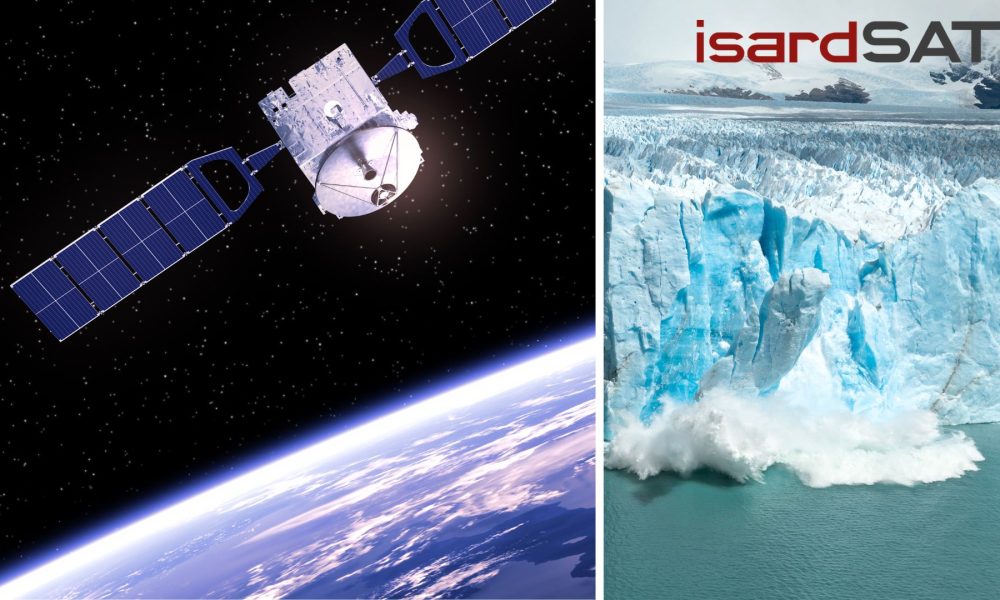
Experts from IsardSAT, based at Surrey Research Park, have helped scientists calculate that together Greenland and Antarctica have lost around 11.3 trillion tonnes of ice since the late 1970s, contributing to a three-centimetre rise in global sea levels.
These figures offer one of the most comprehensive assessments of the impact of climate change on the polar regions. Significantly, the study found that accelerated glacier melting accounted for 84% of the total ice loss recorded.
The findings were compiled and published in the journal Scientific Data by the Mass Balance Inter-comparison Exercise (IMBIE) team on Wednesday 16 September 2026. Backed by the European Space Agency and NASA, the IMBIE collaboration brings together scientists from around the world to measure Earth’s largest ice sheets using satellite observations and other sources of data.
IsardSAT is an SME and member of Surrey Research Park’s Space Enterprise Quarter business community, specialising in Earth Observation solutions.
The company, which is headquartered in Barcelona, Spain, developed software to combine ice estimates produced by multiple research teams and data sources involved in the project.
Working with international research partners, IsardSAT’s R&D team in Guildford created a software platform that unified data from different scientific groups, enabling a shared view of how the ice sheets were evolving and making collaboration more effective.
The software brought together data from 42 independent satellite surveys and in situ sensors, drawing on observations from 27 satellite missions and records dating back to 1972 for Greenland and 1979 for Antarctica, including early Landsat imagery.
Mark Pattle, Software Engineer at IsardSAT, said:
“The IMBIE project includes a large number of independent estimates of ice-sheet loss from researchers around the world, so developing this code was an important component. This software enables us to combine all these datasets together, giving us a more complete picture of how the ice mass has been changing and greater confidence in our results.”
Professor Andrew Shepherd, Head of the School of Geography and Environmental Sciences at Northumbria University and founder of IMBIE, said:
“Three centimetres of sea level rise may sound small, but that puts another six to nine million people at risk of coastal flooding and erosion. With the ice sheets set to lose much more ice in the decades ahead, global assessments like IMBIE are vital to protecting communities impacted by climate change.”




See how Surrey Research Park could support your next stage of growth.
Share your details below and we will be in touch to explain more about how Surrey Research Park could support your strategic priorities.